Tag: golf history

  • Hail, King Harry!

    Hail, King Harry!

    Image via Geoff Shackelford (Quadrilateral); originally shared by Harry Hall / The Open Championship

    What a year it has been for Harry Hall.

    Over four million dollars in season winnings on the US Tour, seventeenth place in the FedEx Cup standings, sixth in Stroke Average, number one in Putting Average, seventeen straight cuts made on Tour (with only four players ahead of him on the cut-streak list).

    No wonder the Cornish want to put him on top of Brown Willy and place a crown on his head.

    His achievements in 2025 made big waves back home. Friends, family and golfing mates on the Lelant Towans at West Cornwall Golf Club track every shot of every tournament he plays — on Sky TV when he’s shown, and on ShotLink on the PGA Tour website when he’s not. Following Harry’s progress in 2025 has been a joy to behold.


    A prophecy

    It was the year before when the seeds were sown — words of prophecy, even.

    In the first week of May, after shooting 71 and 66 at the CJ Cup Byron Nelson for a five-under, two-round total — cruelly one shot outside the cut line — Harry wrote:

    “Tough times continuing on the course at the moment. Nearly made the cut last week after birdieing four of the last five holes, thinking ‘unlimited patience brings endless opportunity’. That mindset kept me with a chance to play the weekend last week, and it makes anything possible. Could keep me with a chance to make the cut again this week, win this season or have a putt to make East Lake.”

    The following week at Myrtle Beach, Harry made the cut by one shot inside the number, and within two months had his first win on the PGA Tour. The ‘putt to make East Lake’ had to wait another year, but the prophecy was made and the dream was on.


    Season start

    2025 kicked off with a big-bucks Signature Event, The Sentry. Prize money at these events is huge, and a top-ten finish secures both gold and valuable FedEx Cup points. Harry played in three of the eight Signature Events in 2025 and bagged rich pickings at two of them.

    The opener brought a T8 finish and $550,000. January continued positively and he finished the month ranked twenty-third in the FedEx standings.


    Shaken but not stirred

    In keeping with his 007 James Bond idol, a run of three missed cuts in the next four events provided some weekends off to lay the foundations for a remarkable year — one that, if you were not looking closely, might have appeared to come about through unchanged application.

    As it was, Harry was moving to another level.


    Ball change

    Then came the move to Bridgestone, the ball used by Tiger. It was an incredibly brave choice. It took a week or two to adjust, particularly in the winds of the February West Coast swing, but it putted beautifully.

    Whether it was responsible for turning one of the best putters in the world into the best putter in the world is open to debate. What is beyond doubt is Harry’s right to claim that title, or at least a share of it.


    Image: still from video posted by Brad Faxon (Instagram)

    Another benefit of the move was the freedom to wear his Cornish flat cap in the way that Jim Barnes and his grandfather had worn it — free from any sponsor’s logo. The chevron had gone. Noticeably, Harry began to wear an array of new cap styles and colours, matching his growing confidence on the course.

    Not much else changed outwardly. The same shirt sponsors, Hard Rock and Allegiant, remained, set against his Cornish-themed palette of black and gold — along with the black-and-gold striped tee pegs, the lion driver cover and the four-leaf-clover putter cover.


    A champion’s routine

    In another radical change early in the season, Harry adopted a new addition to his pre-shot routine. Identifying perhaps one factor that makes Scottie Scheffler such a consistent ball-striker, Harry copied Scheffler’s ingrained habit of taking his grip and checking it before walking into the ball — never adjusting the grip once set at address.

    “It’s hard,” said Harry. “I’m still getting used to it — you wouldn’t believe how hard it is!”

    We believe you, Harry.


    A new coach

    Butch Harmon. We love Butch in Cornwall — we would surely adopt him if he came to visit. It was no surprise when Harry picked the best.

    One can only imagine the stories of Tiger and Adam that Butch might regale in the swing studio, some repeatable, some not. Besides, he’s the coach to Tommy Fleetwood.

    “He’s a better man than he is a golfer,” says Butch. What greater reference could you get?


    A trip to Montana

    It’s a long way to go — to Big Sky Country — but if a trip is worth making, it is worth making properly. Cornish miners settled there in the nineteenth century; Jim Barnes honed his game there in the early twentieth. Another English golfing hero lives there now — Sir Nick Faldo.

    Six-time major champion. Three Masters. Three Open Championships.

    Who better to consult?

    Harry went the extra mile. He prospered.


    A successful caddie partnership

    Midway through 2025, Harry switched caddies to experienced bag-man Henry Diana, a former tour professional on the Nike Tour. In their first four events together, Harry and Henry finished no worse than tied twenty-fourth. The run would continue.

    From the beginning of May, Harry was on fire. His finishes included a top-twenty in his first PGA Championship and a T6 in the Charles Schwab.

    June ended with two important tournaments for Harry: the Travelers Championship — a Signature Event — and the Rocket Classic in Detroit.

    At the Travelers, where several players withdrew with a sickness bug, Harry pulled himself out of a medical truck just before the third round. Undergoing multiple IVs and without a warm-up, he made the first tee and somehow got around in 69. Feeling a little better on the final day, he shot 65, climbed seventeen places, secured a top ten and collected a $540,000 cheque.

    Worth getting out of bed for.

    At Detroit, he finished at eighteen under par — he had not shot a round over 70 for a month — for T13, moving himself to forty-sixth in the FedEx Cup race.


    Home for the Open Championship

    Whatever the success in America, it was back home where the Cornish wanted to see their boy. In early July, they got their wish.

    Harry rushed to the airport after Detroit and caught an earlier flight. His father picked him up in England, and they headed straight for Open Qualifying at Burnham & Berrow. Without a practice round, and with his boyhood friend on the bag, he got the job done over thirty-six holes.

    Interviewed by John Morgan on Sky Sports after finishing his rounds — in accents that made it sound like a West Country bro-fest — Harry said the course suited his eye, and that he had gone with driver on every hole.

    He was six under after nine holes in the first round. Then trouble arrived. Adopting greater caution, he made it through with room to spare.

    “Now that I’m in the Open,” he said, “I think my wife and daughter will come across.” That they did.

    He finished the interview by saying he was off to buy a drink for anyone from Cornwall who had travelled up to Somerset.


    A hundred-year moment

    In an article published in the Global Golf Post in July titled ‘Too few pay mind to golf’s history’, Lewine Mair highlighted the lack of interest shown by many modern professionals in the game’s past. There were, she noted, exceptions — among them Harry.

    “England’s Harry Hall is also worth a mention. He is a 27-year-old member of the present generation who has been drawn to the past via the story wrapped in his flat cap… when people kept asking about it, he decided to include ‘Long Jim’ Barnes in the story by way of adding a bit of interest to his own profile… his achievements in winning all the majors other than the Masters in the early 20th century had been Harry’s source of inspiration.”

    In keeping with Mair’s observation, straight after qualifying for the Open, Harry played in a celebration match for his home club West Cornwall Golf Club against Prestwick Golf Club at Prestwick, to honour Jim Barnes’ Open victory in 1925.

    At Prestwick, Harry partnered Phil Rowe in a Ryder Cup-styled fourball match that kicked off the proceedings, culminating in a win for West Cornwall and for Hall and Rowe.


    The partnership of Hall and Rowe in action at Prestwick

    Ryder Cup speculation

    It was at a time when speculation grew as to whether Harry Hall might receive a Ryder Cup pick.

    “It would be massive,” Harry said. “I remember growing up, and Phil Rowe, my assistant coach in college, was my idol. He played in the Walker Cup in 1999. We have his bag in the clubhouse.

    “And people always used to say, ‘H, are you going to put a Walker Cup bag up there one day?’ And I always said, ‘A Ryder Cup one.’”


    The Scottish Open

    Leaving Prestwick on the Sunday with his wife and daughter now across from America, Harry headed to East Lothian to prepare for the Scottish Open. The acclimatisation paid off and, after finding himself in the final pairing on Saturday alongside eventual winner Chris Gotterup, he finished with a top-twenty and ready for The Open.


    The Open

    Harry’s first Open Championship lived up to expectations. After a 4–8–4 start that left him four over par after three holes of round one, he was always playing catch-up and did well to close the gap.

    In the final round, paired with Justin Rose and approaching the last three holes at seven under par in twelfth place, a strong finish beckoned. The closing stretch is notoriously difficult, beginning with the sixteenth — Calamity Corner.

    From the tee, the hole had captured Scottie Scheffler’s imagination.

    “It’s one of the coolest views that I’ve seen in the game of golf,” he said. Asked after his maiden Open victory whether he was disappointed to make only par on the final day, having birdied it in each of the first three rounds, Scheffler replied: “I was fortunate to be able to enjoy the walk with a putter versus having to go down there into the ravine and try to hit a wedge out.”

    No such luck for Harry. His tee shot slipped off the side of the green and down into the chasm. Standing precariously, he did not appear fazed. He had played the shot before — growing up at Lelant, over the side of the ninth or through the back of the second, countless times as a boy. He blasted the ball high into the air, landing it to around eight feet, then calmly holed the putt for three.

    As Sky commentators speculated about a potential Ryder Cup pairing with Justin Rose, Harry walked on.

    But his luck turned on the closing two holes. At seventeen, he drove the ball fully 398 yards, reaching the green of the par four. The ball trickled sideways into a bunker. Two closing bogeys dropped him back from a possible top ten.

    Calamity had struck after all.

    Still, it was a top-thirty finish in his first Open. He also tied Scottie Scheffler at the top of the Total Birdies table, with twenty-one apiece.


    Back to America

    August brought the FedEx Playoffs. Three weeks of whittling the field from seventy at St Jude, to fifty at the BMW Championship, and finally the top thirty at the Tour Championship at East Lake. Getting to East Lake is the pinnacle for a season’s golf on the PGA Tour.

    Harry arrived at St Jude ranked forty-fourth, knowing that a strong week was required. His chances of staying inside the top fifty looked slim after three straight bogeys before the turn in the final round, a run that briefly dropped him outside the number. But he rallied on the back nine with four birdies, signing for a 69 and a tied twenty-second finish — just enough.

    That result moved him on to the BMW Championship the following week, still forty-sixth in the standings and with further work to do. To reach East Lake, he needed to climb inside the top thirty.

    The prize was guaranteed entry into all Signature Events on the PGA Tour in 2026. A private equity investment and the continuing fallout from LIV meant the Tour was becoming more exclusive, as fast-sliding doors closed in front of players’ faces.

    Needing two pars to secure his place, Harry produced an “in-your-life” moment — a pitch landing perfectly at the top of the slope and trickling down into the hole, the Bridgestone logo hovering briefly where a Nike swoosh once had. A fist-pumping celebration followed.

    “I had practised that chip more than anything else all week,” he said afterwards.

    At the final hole, a safety-first approach left a short putt — just three feet — to fulfil the prophecy. It was confidently holed.

    It took a sixth-place finish, earning $750,000, to make it happen. Harry was the only player who began the week outside the top thirty to progress.

    At the Tour Championship itself, Harry again impressed. On a course newer to him than to most in the field, he more than held his own.

    Paired with Rory McIlroy for the first time on the PGA Tour in the final round, Harry started slowly, two over after five holes, before reeling off six birdies. A closing 66 saw him finish T17, four shots better than McIlroy that day.

    Rory McIlroy, Justin Rose, Shane Lowry and Harry lingered by the eighteenth green to usher Tommy Fleetwood home as he completed a hugely popular Tour Championship victory and collected the $10 million first prize.

    Harry later posted on Instagram about how much he had enjoyed playing with Rory.

    It recalled Scottie Scheffler’s account of playing his one and only round with Tiger Woods, a moment that had left a lasting impression. Harry will surely play many more with Rory, but that time at East Lake will have stayed with him.


    Back home

    The PGA Tour season was over. Week after week, under intense pressure on unfamiliar courses, alongside the game’s leading figures, Harry had met every challenge.

    The European swing followed: Wentworth, St Andrews and Paris. The pace eased. Time with family returned. A week or two back home in Hayle followed. As always, he was at West Cornwall Golf Club, helping with junior coaching.

    Cornish fans travelled to watch him. At Wentworth, he was paired in the opening round with Francesco ‘Dodo’ Molinari, Luke Donald’s right-hand man and Ryder Cup vice-captain.

    It was clear now that Harry would not be a Ryder Cup pick this year. Others had cemented their places and, looking back, who could deny Luke Donald’s choices? Later, Harry enjoyed a strong third round alongside Adam Scott — two of Butch’s players together.

    By the end of the week, a thirteenth-place finish had carried Harry into the world’s top fifty on the OWGR.


    Hall and Scott on the eighteenth at Wentworth

    On arrival at Wentworth, Harry sought out the painting in the clubhouse of Jim Barnes striking the opening shot of the 1926 Ryder Cup, later struck from the record books. Wentworth will no doubt make much of the centenary in 2026 as ‘Where the Ryder Cup Was Born’.

    At St Andrews, with boyhood friend Matt Richards on the bag, Harry found himself on the wrong side of the draw in a weather-affected Dunhill Championship. In France, with Ryder Cup incentives gone, there was less at stake, but it provided an opportunity to catch up with Fanny Sunesson — another anchor to the past.


    2026 holds great promise. Entry into every Signature Event, as well as all the major championships.

    And what of that prophecy? The one written a year earlier, when times were hard, patience was tested, and the dream was simply “to have a putt to make East Lake”?

    It ended like this:

    “Hopefully a green jacket one day. I’ve been in positions like this before in my (still early) career, and I know all that matters is perfecting the process, growing as a player and leaning on the things in life that bring you joy.”

    You take all the time in the world, Harry.

    Cornwall will be watching.


  • The History of Truro Golf Club

    The History of Truro Golf Club

    The History of Truro Golf Club

    85 years of tradition on the Treliske Estate and a legacy of

    110 years since the club first formed at Idless.

    Harry Colt, James Braid and Truro Golf Club

    To much fanfare and in the presence of the great and good of the City of Truro and the County of Cornwall, the new golf course, on the beautiful, south-facing, rolling countryside of Treliske Estate in Truro, opened for play on Saturday 29th May 1937.

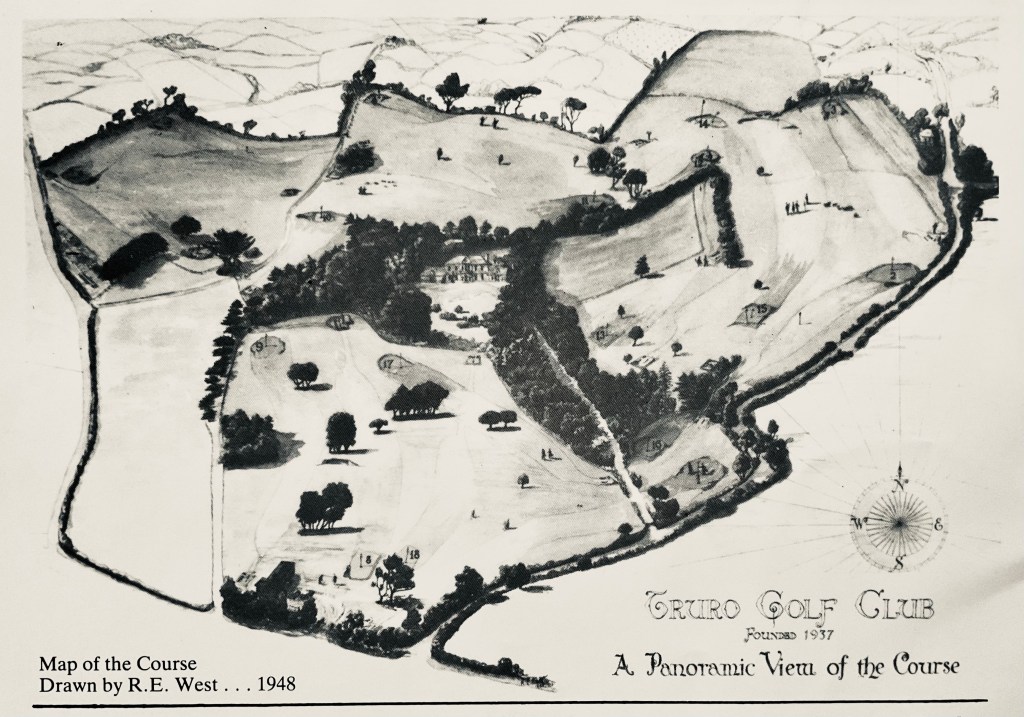
    Map of the course in 1948

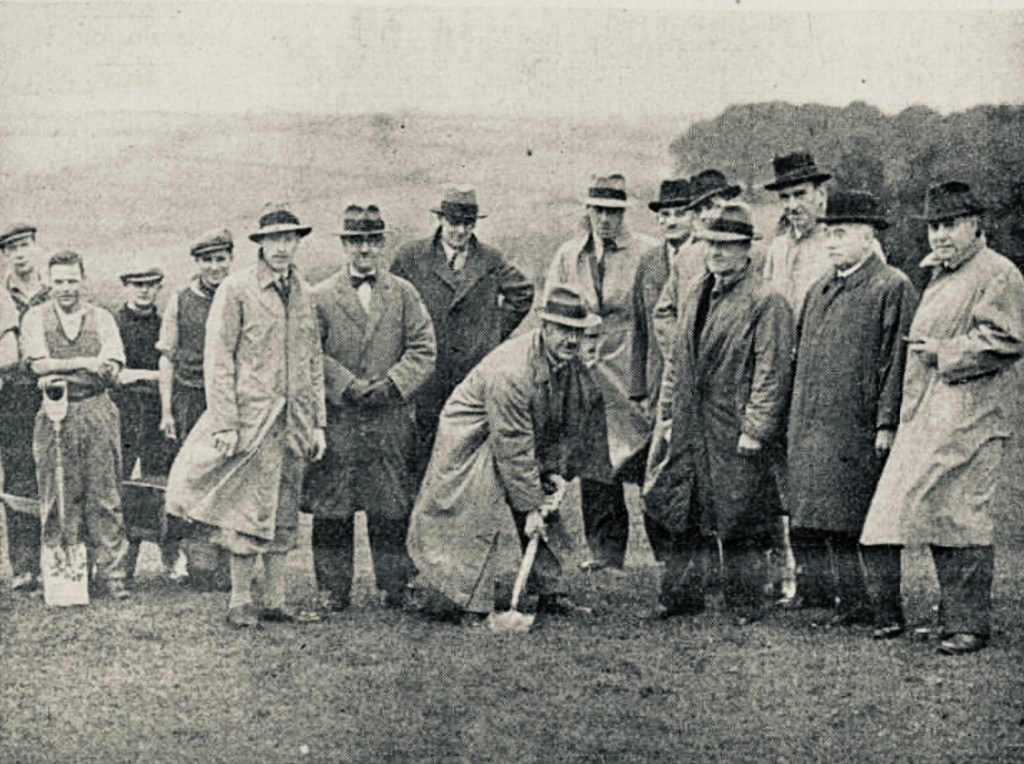
    Principally designed by the renowned golf architect firm of Messrs Colt, Alison and Morrison, it had taken just six months to prepare the first nine holes ready for play, following the ceremonial cutting of the first turf by the Mayor of Truro in December 1936.

    The groundworks were undertaken by the golf constructor, John Stutt, assisted by a team of local men, overseen by John Morrison of the Colt design firm.

    Harry Colt

    Harry Shapland Colt (1869–1951) is arguably the greatest golf architect in history. He transformed an idiosyncratic linksland undertaking into a disciplined professional craft practised on inland sites. He and his partners, through their design methods and the sheer breadth of their work, certainly had more influence on the game of golf than any other firm of architects.

    Colt &Co were formed in 1903 and Harry Colt and his partners went on to work on over 300 of the best golf courses around the world – in 24 countries – from St Andrews in Scotland, Royal Portrush in Ireland, Wentworth in England to Pine Valley in the USA. A remarkable C.V.

    Nowhere was Colt’s influence more profound than on the work of his partners, CH Alison, John Morrison and Dr Alister MacKenzie.

    John Morrison

    John Morrison (1892–1961) was made a partner in the firm of Colt, Alison and Morrison in 1928. He was a brilliant sportsman, a Cambridge blue in three sports including cricket and golf. He was Joyce Wethered’s partner in the Sunningdale Foursomes, winning twice in 1935 and 1936, and Henry Longhurst‘s partner in the Halford Hewett, winning 31 of the 32 matches.

    He assisted Harry Colt on a number of courses and was responsible for designing or remodelling many others, both in the UK and throughout Europe.

    In Britain he helped Colt and Alison at locations such as Wentworth and Sunningdale (New Course) and was largely responsible himself for St Mellons in Wales. Perhaps his best work is at Prince’s, Kent, where he completely rebuilt 27 holes, working with Sir Guy Campbell after the Second World War. Morrison was very much at home in Cornwall. When he remarried in 1938, he honeymooned with his new wife, a well-known lady golfer, at Trevose. The course there had been designed by Harry Colt in 1924, not long after he had taken on Morrison as an assistant, so it is possible that he helped his mentor there as well.

    It is only in the last few years that another of golf’s great course architects has been recognised as having a design association with Truro.

    James Braid

    James Braid (1870–1950), a member of the Great Triumvirate, five-times Open Champion and designer of over 400 courses in Britain in Europe, had a hand in the layout at Truro, according to John Stutt, the course constructor. This is recorded by Bernard Darwin, the doyen of golf writing and golf correspondent to Country Life and The Times for over 50 years, in his biography on James Braid, first published in 1952.

    George E Payne, married to one of James Braid’s great-granddaughters and author of the modern day biography on James Braid, “Divine Fury of James Braid”, asserts what we know – in that ‘John Stutt told Bernard Darwin that he had worked with Braid at Truro.’

    James Braid designed a number of courses in Cornwall; Perranporth, St Austell, Budock Vean and, a course that is considered to be one of his very finest, St Enodoc.

    As the costs for the design and construction at Truro were met by Treliske Estates Ltd, the landowners, and not Truro Golf Club, the club has no record of payments that may have been made to James Braid.

    James Braid was at St Enodoc in 1937 designing two new holes, required to accommodate a new, repositioned, clubhouse. He had every opportunity to visit Truro, for example, to advise on bunkering.

    However, the story of the course built in the 1930s in Truro starts a little earlier, as this extract from the Truro Club’s Golden Jubilee Handbook, published in 1987, explains:-

    Golf Course for Truro?

    This was the question presented to businessmen of Truro‘s Chamber of Commerce at a meeting held on 3rd September 1934.

    The then chairman, Mr JWJ Kemp, introduced the Mayor Alderman, FR Pascoe, and asked him to open a discussion on the possibility of a golf course in Truro. It was considered that, from a business point of view, a golf course would be a great asset to the City of Truro and it would be a great achievement for the Chamber if they could promote such a scheme.

    Following a discussion, it was resolved that a subcommittee be elected to consider the whole question and ascertain suitable sites available and report to the Chamber in due course. This subcommittee comprised of LG Bird, RJ Williams, G Tonkin, C Roberts, RB Webb, W Hicks, WJ Kemp, FR Pascoe & RG Jordan (Secretary), with power to add.

    This newly-formed subcommittee met on the 17th September 1934 and decided the first step was to secure a site – then to ascertain the possible membership.

    During the next three months the committee visited three possible sites: Higher Newham, Dudman Farm and Treliske Estate. From these, Higher Newham was provisionally secured so the next step was to hold a public meeting.

    This was held at the Town Hall where it was resolved that ‘Truro be in favour of a Golf Club’. There was a list compiled of 115 signatures who would support such a venture.

    On the 20th March 1935 another subcommittee meeting was held at the Town Hall where it was reported that progress had been halted on the Newham site because of grazing rights.

    A week later the subcommittee met, yet again, at the Town Hall to discuss the Treliske site but found difficulties had arisen with the owner, Col. Stanley Smith and a local farmer. Capital was a great problem.

    With this setback they decided to investigate alternative sites in the Kenwyn Hill and Union Hill areas but this proved unsatisfactory and remained so for the rest of the year.

    In 1936 two other areas were viewed. Penweather Moors and Idless both proved undesirable as a golf course.

    In March 1936 interest was revived in the Treliske Estate site and a meeting with Col. Stanley Smith showed some progress, although the problems with the local farmer hampered proceedings. The Colonel, being chairman of the board of governors, had earmarked his residence for a school.

    It is worth noting that in January 1913 a very small membership played on a nine hole course which was situated between Idless and the Penmount estate. It was in existence for some five years and little is known of its short history. The then Bishop of Truro was amongst its members alongside other names like Messrs Carlyon, Clemens, Cock, Grenfell, Gibson, G Gow, Forbes, WG Goodfellow, Jesty, JH Thomas and the Reverends Carlton and Hawken. The ladies had a section too, the Honourable Vera and Mildona Boscawen amongst its members.

    In April 1936, it was realised that there were capital difficulties and the only way out appeared to be to form a local syndicate and this syndicate then rent to the golf club.

    A public meeting was called for funds, but this failed.

    In one week, five meetings were held and Mr Dick Williams of Lloyds Bank proved helpful in forming a syndicate which consisted of: WJ Kemp (grocer), AJ Roberts (chemist), WB Webb (draper), A Collet (outfitter) and J Searle (farmer) (these five men were all members of the Chamber of Commerce). They then formed what is known as Treliske Estates Ltd. At a May meeting the committee estimated the cost of running a golf club and drew up rules in readiness to handover.

    It is interesting to note that the first 200 members who joined did not pay an entrance fee (one guinea was charged to later joiners) and that subscriptions were to be three guineas a year for men and two guineas a year for wives and daughters of gentlemen members, with further concessions for juvenile members to be decided upon; visitors green fees were two shillings and sixpence. Tenders for the design of the course we asked for and it was decided to accept Messrs Colt, Alison & Morrison’s ideas to layout the course of some 5,560 yards. This occurred in November 1936.

    On the 18th of December 1936 the first turf was cut by the Mayor of Truro, Mr AJ Roberts.

    Four months later in April 1937, the Chamber of Commerce subcommittee handed over the responsibility of the new club to the elected Golf Club officers.

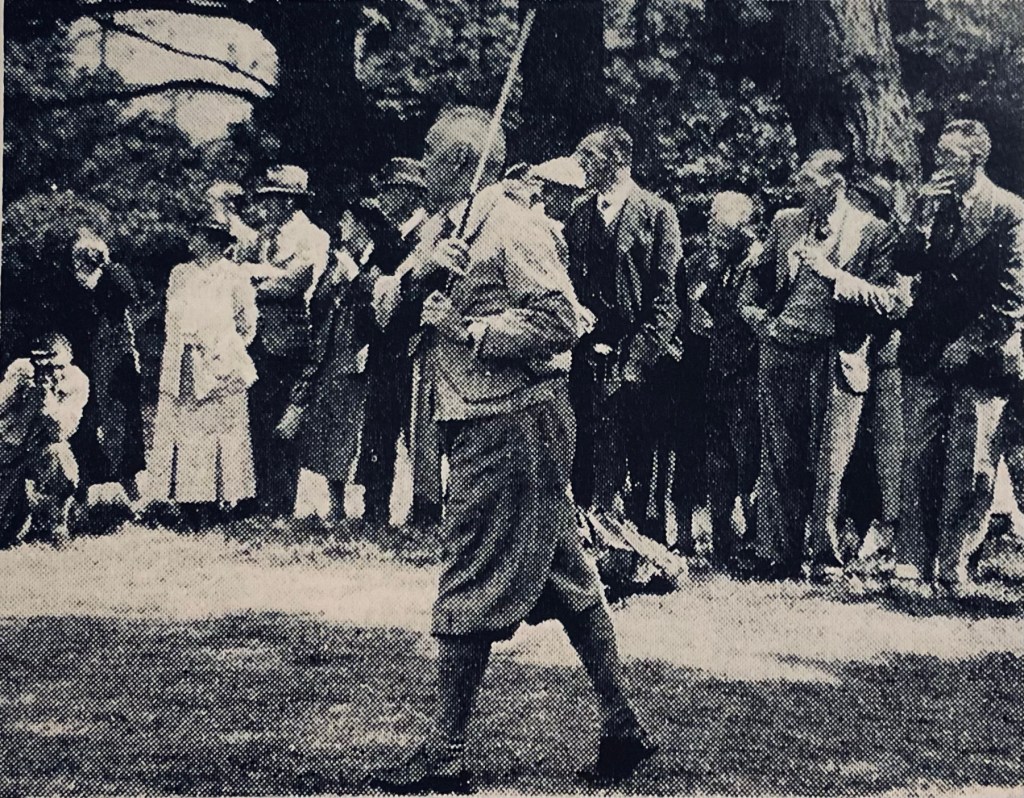
    On the 29th May 1937 the first 9 holes were opened and five members of the syndicate were amongst the first people to drive off.

    Mayor of Truro, Mr AJ Roberts drives off

    The full course was completed before the end of the year. The club, in the war years to follow, had little chance to establish itself; everyone seemed to be preparing themselves for the Home Guard, the ARP etc.

    During the war, the Army requisitioned the club for a while and took over the 18th, 5th, 6th, 7th, 8th and 9th holes for regimental purposes, as well as an area for an Italian Prisoner of War camp.

    On the remaining holes, sheep were grazing to provide extra income. The club managed to keep going and the landlord reduced the rent to £100 per annum to help out.

    When the war ended, it took some time to get the club going. On parts of the course, metal detectors had to be used to remove unexploded grenades. However the following press clipping taken from the West Briton of 27th of May 1946 expressed a brighter future :–

    If the 1937 course at Treliske is the ‘New Course’, then the course laid out at Idless, near Penmount in Truro can fairly be termed the ‘Old Course’.

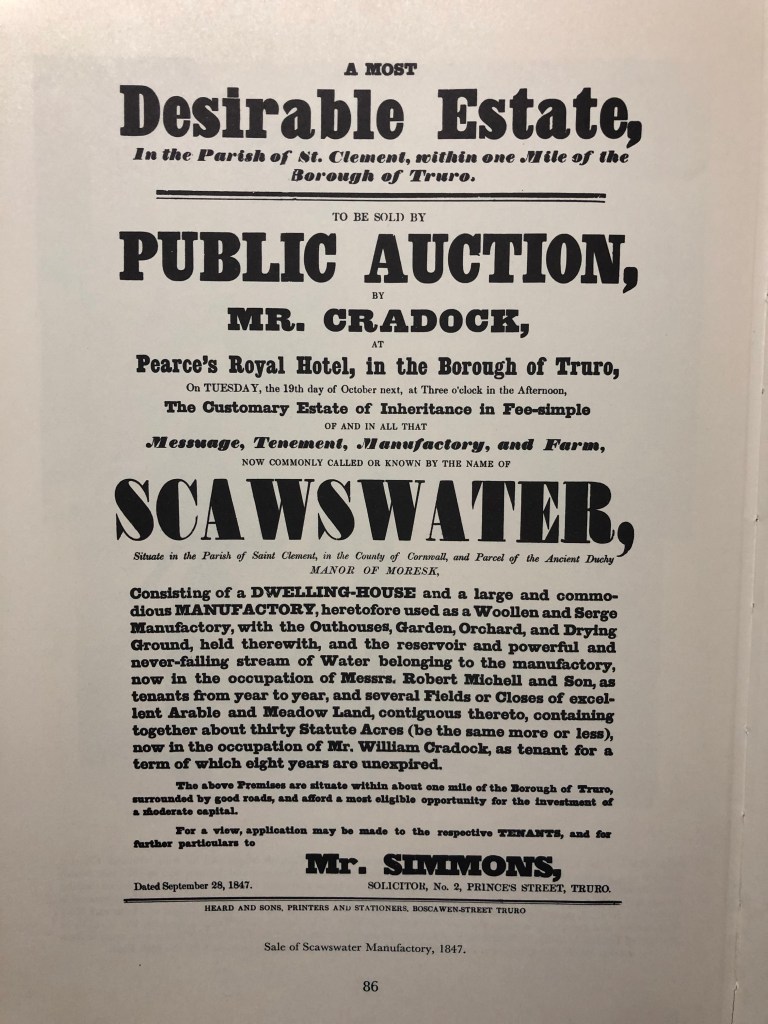
    The land on which the Old Course was built stretched out steeply below Scawswater Mill, the site of a 19th Century woollen mill.

    Report from the Western Daily Mercury Thursday 24 October 1912 –

    Truro Golf Club – An Auspicious Start with a Sporting Course–

    A general meeting of the members of the Truro Golf Club was held on Tuesday evening. This was the first meeting since the establishment of the club in June. The Mayor (Mr W G Goodfellow), presided over a large attendance, which included several ladies.

    The report of the committee, presented by the hon. secretary, stated that the nine-holes were ready for practice, but that owing to the wet weather and the lateness of obtaining two of the fields it was considered advisable to postpone the formal opening for a month or so. A pavilion has been erected at the entrance to the links, consisting of separate dressing rooms for ladies and gentlemen, and large central room, together with a serving room and a work room for the professional. Accommodation for motors and bicycles would be afforded at the old mill house. It was proposed to engage the services of a professional at an early date. The special thanks of the committee were due to Mr A C Polwhele, Mr H C Clemens and Mr A J Cornelius for very great assistance, financial and otherwise, and to the proprietors of a local newspaper who had offered to present a challenge prize in the shape of a silver rose bowl of the value of £10.

    Mr E R Carlyon said the builder promised to complete the pavilion in a fortnight’s time, and he would like it generally known that the members can now play right round the course. The treasurer (Mr W E Grenfell) reported that the expenditure to date reached nearly £160 on the capital account, which left a deficit of about £50, being really the balance of the amount asked for from the members at the first general meeting. Out of current income about £60 had been spent on wages, rent, etc.

    A set of rules drafted by the committee were considered, and were adopted with one or two slight alterations – Dr. Sharpe raised the question of the eligibility of ladies to serve on the committee – Mr Perry remarked that in other clubs the rule was that ladies had a committee of their own and their own secretary, and reported to the general meeting – It was thought that a similar course could be eventually adopted.

    It was reported that no play should be permitted on Sundays and Good Friday.

    The membership was stated to be 142, of whom 40 were ladies – Mr Lean proposed that when the membership reached 150 an entrance fee of £1/1shilling should be charged – The Mayor considered they should have an entrance fee after 25 December, but Mr Lean’s motion was carried.

    The Mayor remarked that it was a matter for congratulation that they now had a golf course in Truro. He had been informed that the site was the best obtainable in the district, and as good golf could be obtained there as at any links.

    The nine-holes which constitute the course vary in length from 117 to 407 yards. The holes are of an extremely sporting character, and are of great variety. The first tee is at an elevation of about 200 feet above the green and constitutes a tricky hole, it being difficult to judge the distance. The length of the hole is 200 yards. The second is a “dog leg” hole, the green being placed in a cup or basin at the corner of the field. Its distance is 275 yards. The third, a short hole of 117 yards, furnishes a nice shot for an iron, the green being protected by a bunker. The fourth 400 yards is at present in an unfinished state. It is one of the longest holes. The fifth has an excellent double bunker, which takes a long drive to clear. The distance of the hole is 407 yards. The sixth is one of the most sporting holes on the course, and is locally known as Spion Kop, being a rising drive of 144 yards into a cup protected by two hillocks. The seventh 307 yards is a blind hole. The eighth is an ordinary hole of 294 yards, but difficulty is presented by the sloping nature of the green. The ninth 397 yards is laid for some distance along the bottom slope of a hill, and unless the lower portion of the fairway is found the stance is not the best. There is plenty of rough along the course for the benefit or otherwise, of the reckless or careless, and the links should furnish capital sport.”

    An interesting finding in looking back at the member lists for the Old and New Courses, is the fact that there were a number who were members of the ‘Old’ that became founder members of the ‘New’.

    In 2020, Paul East and a small team of enthusiasts from Truro Golf Club, set out to find the exact location of the holes laid out across the land.

    The Plan of the Old Course

    The design layout was reported as being suggested by Albert Firstbrook, the Professional from Lelant. He had spent time as a golf professional in South Africa, staying with his elder brother. The naming of the sixth hole as Spion Kop is reference to the Battle of Spion Kop, which took place in 1900 on a steeply-banked hill in South Africa, during the Boer War. The ‘Kop’ at Anfield, originally a natural, steeply-banked viewing terrace, is similarly named after the site of this battle. Firstbrook himself would be killed in action – at the Battle of the Somme, in November 1916.

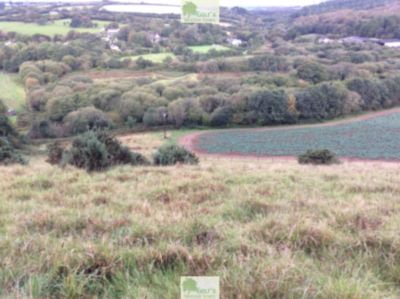
    This is a view from the first tee of the Old course, straight down the hill. The first hole was over 200 yards. The telegraph pole that can be seen is 132 yards, whilst the light green grassy area behind the trees is 283 yards.

    The top field which was probably the second green (behind the tree in the middle) was the short 117 yard hole. The hedgerows would have been stone walls which divided the fields. The copse to the left of the tree in the middle would not have been there. The strip of land to the right of the hedgerow is considered to be the location of the 8th and 9th fairways.

    There was great optimism for the club – but it did not survive.

    The following is from a newspaper report from February 1923 regarding the local hunt. This report confirms the location of the former course. It is obvious that the course has now disappeared. ‘From Lord’s Wood they drove him across the Idless Valley and over the old Truro Golf Links, past Penmount, and on to Polwhele’.

    It took more than the Great War to halt the enthusiasm of the golfers in Truro to pursue the love of their sport. Within 15 years or so, they were back at it again at their new home on the Treliske Estate.

    Today’s members recognise and honour the traditions of golf in this great City, with gratitude to those who laid the ground and trod these paths before us.

    Acknowledgments

    Researchers & compilers

    Mike Roberts – http://www.cornishgolfer.com

    Paul East – http://www.hickorygolfsouthwest.co.uk

    Truro Golf Club – The Golden Jubilee Handbook published 1987

    Henry Lord & Peter Pugh – The Masters of Design, Great Courses of Colt, MacKenzie, Alison & Morrison ISBN 9781848310902

    Bernard Darwin – James Braid ISBN 0713466804

    The West Briton

    The Western Morning News

    The British Library Board

    George E Payne – Divine Fury of James Braid ISBN 9781919614038

    David Holmes, General Manager, Prestbury Golf Club

    Michael Herriott, The James Braid Reciprocal Courses

    Golf’s Missing Links http://www.golfsmissinglinks.co.uk

    Ward Lock & Co Illustrated Guide Books